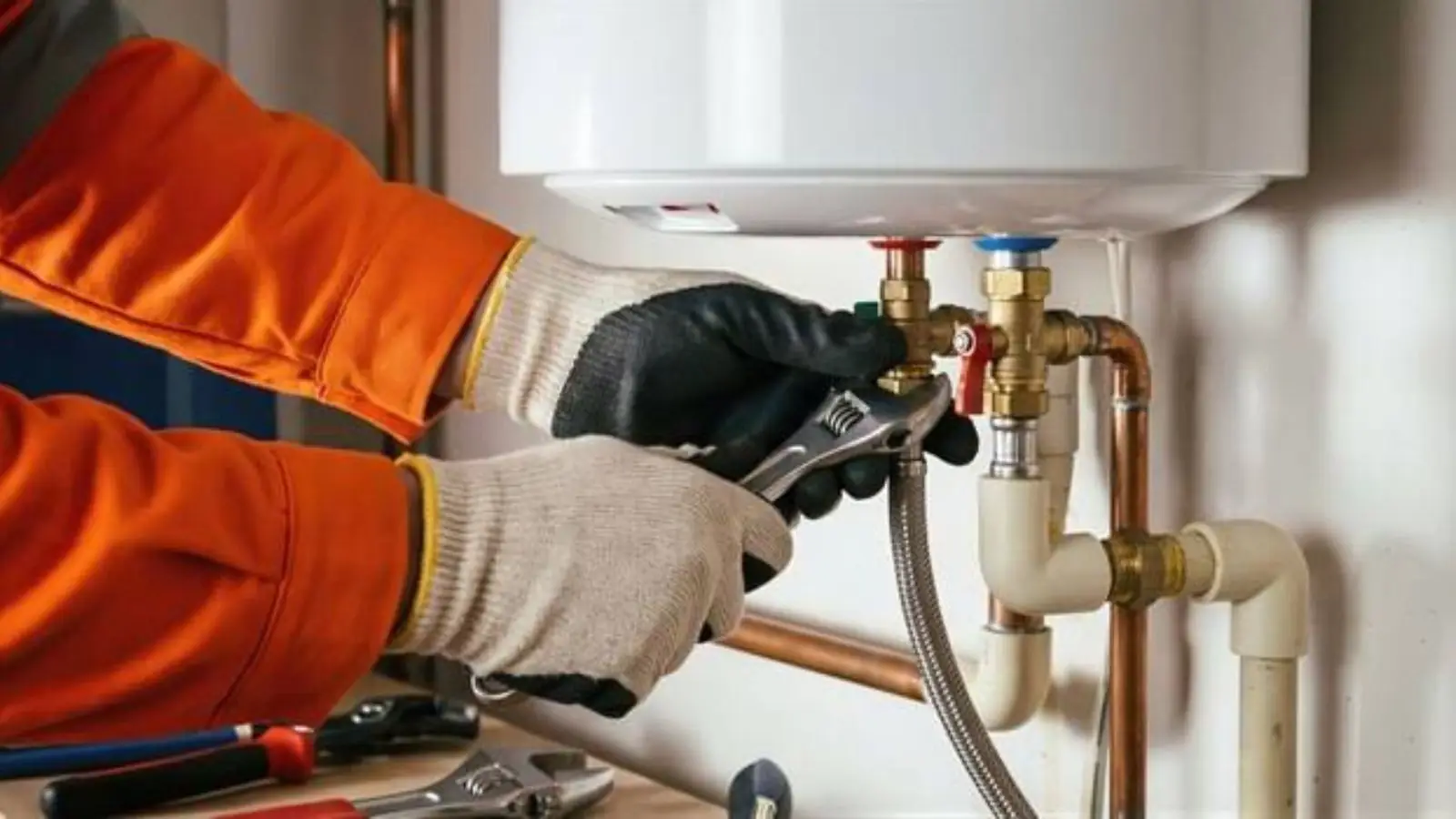
Water heater leak cleanup in Flower Mound, TX starts with one action: close the cold water inlet valve on top of the heater, then call our 24/7 dispatch line. A full tank holds tens of gallons, and a split tank empties across the floor in a short time. Our crews extract the water, dry the area around the heater and record moisture readings. Your plumber repairs or replaces the unit.
The two jobs are separate and both are needed. A plumber stops the leak at its source, but a new heater does nothing for the wet drywall, baseboard and flooring left behind. That damp material is what we dry.
How a Water Heater Leak Starts and Where the Water Goes
A steel storage tank slowly corrodes from the inside, and when the wall finally gives way the whole tank can release at once. That is a rupture. Other leaks are smaller: a loose fitting on the hot or cold line, a drain valve that weeps, or a temperature and pressure relief valve that discharges because pressure built up inside the tank.
The path of the water depends on where the heater sits. If yours is in a garage, water usually runs across the floor toward the lowest point and wicks into the bottom of the wall. In a hallway closet, it soaks the carpet or flooring outside the door. In an attic, it drops through insulation and drywall into the ceiling below.
A drain pan under the heater catches small drips only. A pan with a drain line carries overflow outside, but a pan with a clogged or missing line spills over its rim the moment a tank splits.
What You See and What It Means
| What you notice | Likely cause | Who fixes the leak | What our crew does |
|---|---|---|---|
| Water pooled around the base of the tank | Rusted tank wall or failed seam | Plumber replaces the heater | Extracts water, dries the floor and wall base |
| Dripping from a pipe near the top | Loose or corroded fitting | Plumber replaces the fitting | Dries the pan area and checks the wall behind |
| Water running from a pipe beside the heater | Relief valve discharging | Plumber checks pressure and the valve | Dries the spill path, flooring and trim |
| Damp ring or stain on the ceiling below an attic heater | Slow seep from the tank or connections | Plumber replaces the failing part | Opens and dries wet insulation and drywall |
| Rusty, cool or discolored water at taps | Tank corrosion beginning | Plumber inspects the tank | Nothing until water escapes the tank |
A tank that seeps for weeks leaves damage that looks very different from a rupture. Swollen baseboard, a dark stain at the bottom of the wall and a musty smell point to slow water. Standing water points to a recent failure.
Heater leaking now? Call the 24/7 line and describe where the unit sits.
☎ (817) 623-9267Water Heater Leak Safety: The First Hour
- Close the cold water inlet valve above the heater. Turn the handle until it stops. This also stops new water refilling the tank.
- Switch off power to an electric heater at the breaker, but only if the panel is dry and you can reach it without stepping in water.
- For a gas heater, turn the gas control to off only if you can do it safely. If you smell gas, leave the house and call 911 or the gas utility first.
- Do not touch the relief valve discharge pipe or the drain valve. Water from a tank can scald.
- Stay out of water that reaches outlets, power strips or the panel. Call the utility or 911 before calling us.
- Photograph the heater, the label and the damage before anything moves.
Hot water counts for something here. Water that has just left a tank is clean supply water, but if it sat in a pan or a wall for days it can pick up debris and odor. We note how long the water has been present, because it decides whether materials dry in place or come out.
How Our Crew Cleans Up and Dries the Area
Extract
Portable extractors and a wet vacuum pull water from carpet, tile and the garage floor, including the pan area.
Open the wall base
We pull baseboard and may drill small holes or cut a short strip of drywall at the bottom to reach wet insulation.
Map moisture
Moisture meters and a thermal camera show which studs, plates and flooring are still wet.
Dry
Air movers push air across the base of the wall while a low grain refrigerant dehumidifier removes moisture from the room air.
Verify
We take readings each visit and compare them with an unaffected spot until the area is back to normal.
Ask any restorer about ANSI/IICRC S500 and whether its crews follow it on a leaking tank job. Daily readings are the proof that drying is finished, and your adjuster may ask for them. For the full extraction side, see emergency water removal.
Water that reaches wall cavities needs more than surface drying. Our guide to structural drying explains how air is pushed into cavities and how the end point is set.
What Changes the Cost of a Water Heater Leak Cleanup
- How long the water sat before the heater was shut off.
- The floor material: concrete dries differently from carpet, vinyl plank or tile.
- Whether water reached the wall base, insulation or the room next door.
- Attic location: ceiling drywall and insulation below add removal work.
- The number of drying days and the amount of equipment needed.
Dispatch explains the scope and price before work starts, so you can compare it with what your policy covers. We do not price a leak by the phone alone, because the wall base decides the job.
Need the scope explained? Call the dispatch line and give your address and ZIP.
☎ (817) 623-9267Insurance and a Water Heater Leak
The Texas Department of Insurance says most homeowner and renter policies cover sudden and accidental water damage. A tank that ruptures overnight fits that description. A slow seep that went on for months is a gradual leak, and gradual leaks and seepage are generally excluded.
That split is why timing and evidence matter. Photograph or film the damage before repairs, and keep the failed heater or part until the adjuster has seen it. TDI also says to report hidden damage within days of first noticing it, so call your insurer early and ask whether the heater itself is part of the claim.
Our crew records photos and moisture readings for your claim. We do not decide coverage. Your insurer does, and your policy language controls the answer.
Mistakes to Avoid After a Heater Leak
- Draining the tank into the house to relieve pressure.
- Restoring power to the heater before the tank is full again.
- Rolling up wet carpet but leaving the pad and baseboard in place.
- Setting a household fan and calling it done while the wall base stays wet.
- Discarding the failed heater before the adjuster looks at it.
Dispatch Across Flower Mound and Nearby Towns
Give the dispatcher your street address and ZIP. Flower Mound uses 75022 and 75028, and the 75077 ZIP also overlaps part of town. Cross streets help too, since FM 1171, US 377 and FM 2499 cross the town and let the dispatcher place the property quickly.
We also dispatch to Lewisville, Grapevine and Argyle. In Argyle, the town does not provide water connections, so ask Argyle Water Supply Corporation where your main shutoff sits. A replacement heater is plumbing work, so ask the Town of Flower Mound building department whether a permit applies to your install.
Frequently Asked Questions
Yes. Dispatch is 24/7, including nights, weekends and holidays, and same-day response is available when crews are free. Call, give your address and say where the heater sits and whether water is still running.
Close the cold inlet valve first, because that stops new water entering the tank. Then turn off power at a dry breaker for electric units. For gas, shut the control only if it is safe, and leave if you smell gas.
Usually yes. The plumber works on the heater and lines while our crew extracts water and sets drying equipment in the wet area. We keep clear of the work area until the plumber is done.
Standing water and a soaked floor point to a rupture. Swollen baseboard, a rust ring on the pan and a stain with a dark edge suggest a slow seep. The difference matters for coverage, so photograph everything.
That depends on your policy and the cause. TDI describes sudden and accidental water damage as generally covered, and gradual seepage as generally excluded. Ask your agent whether the heater itself is included.
Treat it with caution. Hot water can scald, and water that has sat in a wall or pan may carry debris. Wait for the heater to cool, wear gloves and keep children and pets out until cleanup.