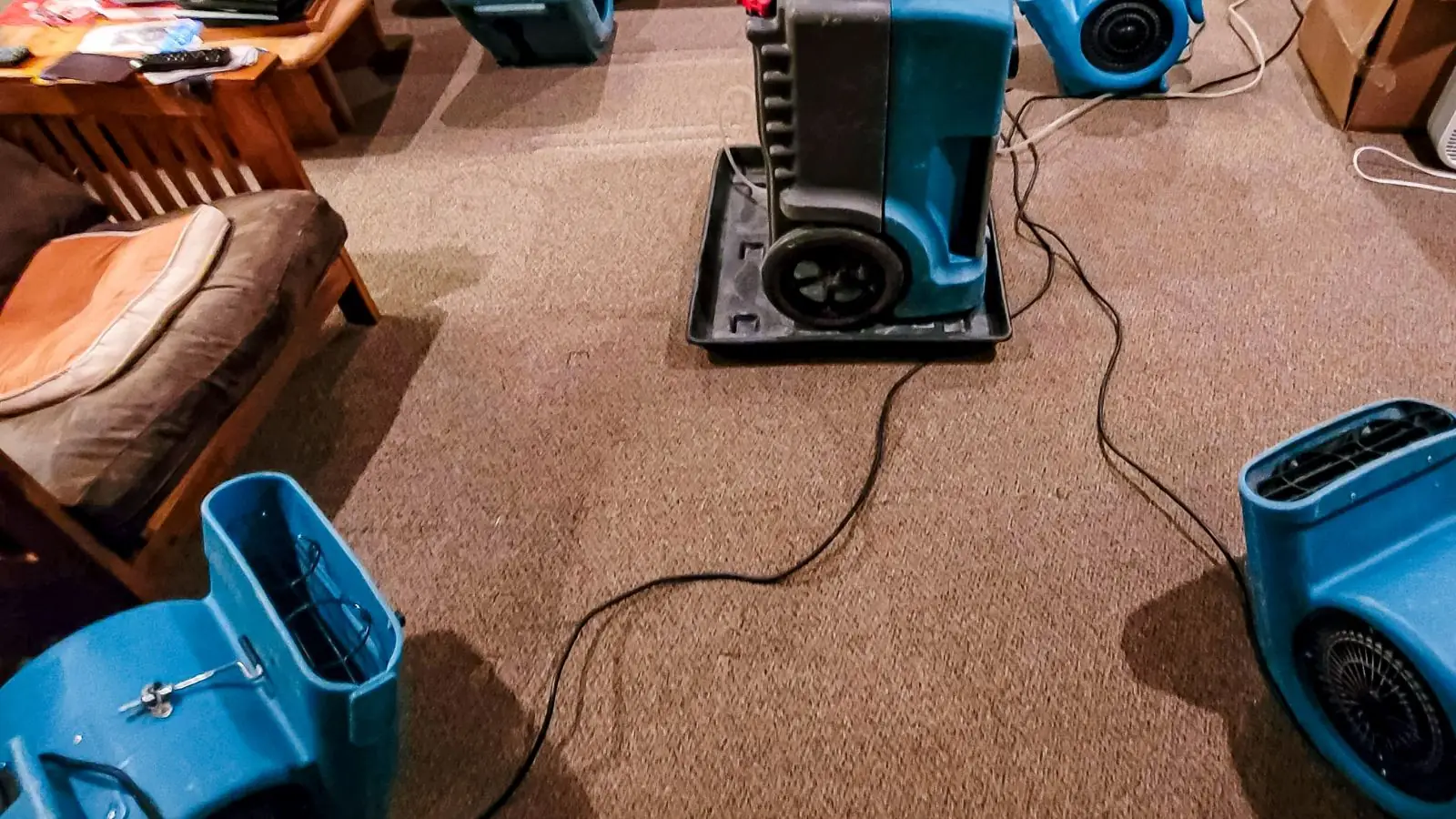
Structural drying and dehumidification in Flower Mound, TX means removing moisture from framing, subfloor, drywall and air with measured equipment until readings return to normal. Our 24/7 dispatch team can plan a drying job around your home. The one action to take now: keep the equipment running once it is set and call before you move or unplug any of it.
How Drying Actually Works
Water leaves a wet material only if the air next to it can take on moisture. Warm, moving, dry air does that, and still, humid air does not. Drying equipment is a system for keeping the air around wet surfaces hungry for moisture, and then carrying that moisture out of the building.
That is why drying takes days rather than hours. Water sits deep in wood and gypsum, and it moves to the surface slowly. For the emergency stage that comes first, see water mitigation. This page covers the drying that follows extraction.
Mapping the Moisture Before Setting Equipment
The crew starts with a moisture meter and a thermal camera. A pin or pinless meter reads drywall, baseboard, wood framing and subfloor, and the camera shows cool, wet areas behind paint that a meter would miss. Readings go on a sketch of each room, with a photo at each spot.
The crew also takes a reading from a dry, unaffected part of the home, on the same material. That reference sets the drying goal. A wall is not dry because it feels dry. It is dry when it reads close to the reference wall in the room next to it.
| Tool | What it tells the crew | Why it matters |
|---|---|---|
| Pinless moisture meter | Moisture just below a flat surface such as drywall or flooring | Scans large areas fast without damaging the surface |
| Pin meter | Moisture at a point in wood or framing | Confirms studs and plates are actually drying |
| Thermal camera | Cool patches where evaporation is happening | Finds hidden wet zones to check with a meter |
| Thermo-hygrometer | Air temperature and humidity in the room | Shows whether the equipment is pulling the air dry |
Walls or floors still damp? Call the 24/7 line and a dispatcher will help plan the drying.
☎ (817) 623-9267Air Movers and Dehumidifiers Do Different Jobs
Air movers are small, powerful fans aimed along walls and across floors. They break up the layer of damp air hugging a surface and speed evaporation. They do not remove moisture from the house. They only move it into the air, which is where the dehumidifier comes in.
A low grain refrigerant (LGR) dehumidifier works like an air conditioner coil, chilling air so water condenses and drains out. It handles most homes. A desiccant dehumidifier uses a drying wheel instead, and it can keep working in cool conditions or when materials hold a lot of moisture, like dense hardwood or a tightly packed wall.
The crew chooses by room size, material and how wet things are. Crews place one dehumidifier to serve several wet rooms, so closed doors matter and the crew will tell you which to leave shut.
Open It Up or Dry It in Place
Walls and floors dry from the surface, so a wall cavity full of wet insulation dries slowly behind drywall. The crew can pull a toe-kick, drill small holes to push air into the cavity, or lift a strip of baseboard. If drywall is swollen, stained or came into contact with sewage, it is cut out.
Insulation that holds water is usually removed because it dries poorly. Cabinets, subfloor and a concrete slab each have their own approach. Slab and tile are dried in place with air and dehumidifiers. Wood subfloor under vinyl or carpet sometimes needs the flooring lifted to release the moisture trapped below.
Wondering whether walls must be opened? Describe what got wet and we will tell you what to expect.
☎ (817) 623-9267Safety Rules for Equipment in Your House
Standing water and electricity do not mix. If water is touching outlets, cords or a panel, or you smell gas, leave and call 911 or the utility first. Never plug in a fan or dehumidifier yourself while the floor is wet. The crew runs equipment on separate, dry circuits and checks the load so a breaker does not trip while you sleep.
- Do not unplug the dehumidifiers or air movers to run an appliance. Ask for an outlet plan instead.
- Do not stack items against fans or close the doors the crew left open.
- Keep cords out of walkways and away from any damp floor.
- If a breaker trips, leave the equipment as it is and call the dispatch line.
- Keep children and pets from touching the machines, which get warm and run for days.
Monitoring Visits and How the Crew Knows It Is Done
Each visit, the crew re-reads every marked spot and writes the numbers in a log, with the room temperature and humidity. Equipment is then moved, added or removed depending on what the numbers show. A room that dried fast loses its fans, and a stubborn wall gets more airflow.
Drying ends when the marked readings reach the reference you set on day one and stay there. Your log and photos are what an adjuster reviews if you file a claim. The published reference for these steps is ANSI/IICRC S500, and you can ask any company whether its crews work to it and how it records daily readings.
Local Conditions That Affect a Drying Plan
The National Weather Service Fort Worth normals give DFW about 37.01 inches of precipitation a year for 1991 to 2020. In a humid, rainy stretch, outdoor air is slow to take on moisture, so keep windows closed and let the dehumidifiers work with the air conditioning. Opening windows to dry a house on a damp day can work against the equipment.
The Texas Department of Licensing and Regulation advises keeping indoor humidity at or below 50 percent. That is a good target to ask about during monitoring visits. After a hard freeze like February 2021, when DFW logged 139 hours at or below freezing from February 13 to 19, many homes needed drying at once, so call early when equipment is in demand. Dispatch handles Lewisville and Argyle too.
What Changes the Cost of Structural Drying
- The number of wet rooms and the area of affected floor, wall and ceiling.
- The materials involved, since dense wood and plaster dry slower than drywall.
- Whether wet drywall, insulation or flooring must be opened or removed.
- The number of equipment pieces and the days they run.
- The water category, because contaminated water adds removal before drying.
- How many monitoring visits it takes to reach the goal.
Dispatch explains the scope and price before work starts. Drying a covered loss is also something to raise with your agent. The Texas Department of Insurance says to report hidden water damage within days of noticing it, document it, and keep receipts for temporary measures.
Mistakes to Avoid After Water Is Removed
- Closing up a wall because the surface feels dry.
- Running a household fan and calling it done. A fan moves moisture around without taking it out.
- Ending equipment early to cut noise or the electric load.
- Painting or reinstalling flooring before the readings match the reference.
- Skipping the log. Without numbers, nobody can show the structure was dried.
If cleanup and tear-out come first, read about water damage cleanup. If a rebuild follows, water damage repair picks up once the structure reads dry.
Frequently Asked Questions
Yes. Dispatch is 24/7, including nights, weekends and holidays, and same-day response is available when crews are free. Call, describe which rooms are wet and what caused it, and the dispatcher will plan the equipment and next steps with you.
It depends on the material and how wet it is. Drywall may read dry sooner than framing or hardwood. The crew stays until readings match your dry reference, so the length of the job is set by the numbers, not a fixed schedule.
Yes. Air movers and dehumidifiers run continuously because water leaves materials slowly. The crew checks readings each visit and takes machines out as rooms reach the goal, so the load drops over time.
Not reliably. Fans move damp air around, and outside air can be wetter than your indoor air, which stalls drying. A dehumidifier controls the moisture, and the crew sets the whole system to work together.
No. The crew prefers drying in place when readings allow, using small holes or a lifted toe-kick to push air through. Walls are opened when drywall has swollen, insulation is wet or sewage reached the cavity.