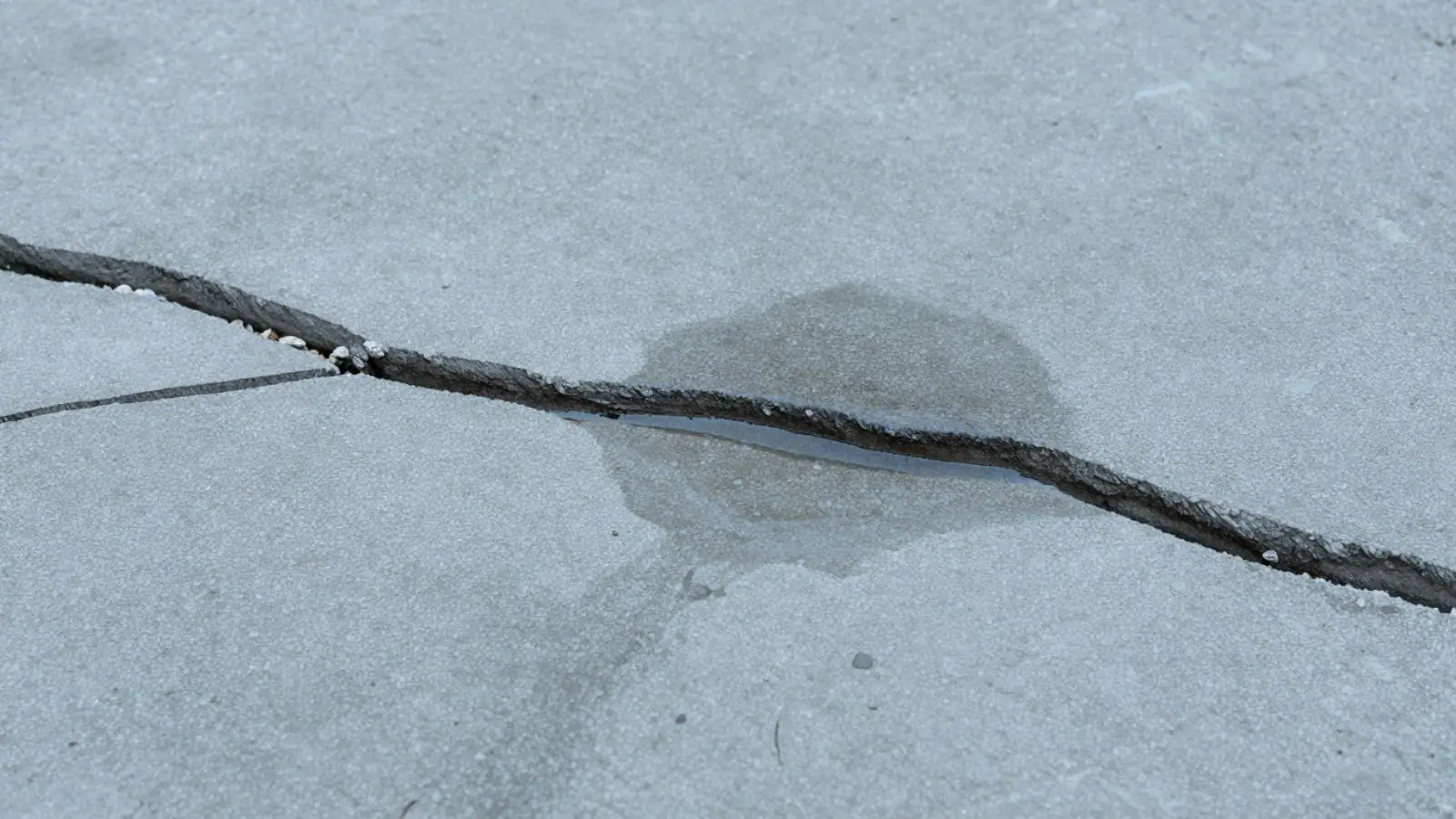
A slab leak is a break in a water supply line in or under a concrete floor, and slab leak water damage in Flower Mound, TX is what that water does to the floors and walls above it. Take one action now: shut off the main water valve. Then call a plumber for leak detection and our 24/7 dispatch line for the wet floors. We dry, and the plumber fixes the line.
This page applies if your home sits on a slab. If your house is built over a crawl space or has a lower level, a leak behaves differently, and our water mitigation page is the better starting point.
How a Slab Leak Happens and Why You Often Miss It
In some slab designs, supply lines run through or beneath the concrete. Over time, a line can corrode, rub against rock or concrete, or fail at a joint. Because the pipe is buried, the leak can run for weeks with no puddle. The water rises through the slab and shows up only where a gap exists, such as under a wall plate or at the edge of the carpet.
A leaking hot water line is the one more likely to give away its location. A warm spot on the floor, or a floor section that feels like it has sun on it with the blinds closed, can point to a hot line under that spot. A cold line leak is quieter and shows up later.
A slab leak is a plumbing failure first and a water damage problem second. We cannot see through concrete, and we do not guess where the pipe is. A plumber with detection gear locates it, and we handle everything the water touched.
Signs of a Slab Leak and What to Check First
| Sign | Check | What it tells you |
|---|---|---|
| Warm spot on a floor | Walk barefoot and compare nearby floor | A hot line may be leaking beneath it |
| Sound of running water with every fixture off | Listen at night in a quiet house | Water is moving through a line somewhere |
| Water meter keeps moving | Close every tap, appliance and hose, then watch the meter dial | A leak exists after the meter, inside or under the home |
| Damp carpet edge or baseboard | Press a dry paper towel against the baseboard | Moisture is coming up at the wall plate |
| Unexplained higher water use | Check your water bill against past months | Water is escaping before it reaches a fixture |
| Cracked or lifted flooring | Look for tile cracks and floating floors that buckle | Moisture beneath is swelling the material |
One sign alone proves little. A moving meter plus a warm spot is a much stronger signal. Do not break into the floor to look, because you will not find the leak that way and you may hit a line.
If your water comes from a municipal system, ask your water utility about the meter. In Lewisville, ask the City of Lewisville utility how to read it. In Argyle, water comes from Argyle Water Supply Corporation, so ask them.
Hearing water with everything off? Call the 24/7 line and describe the signs.
☎ (817) 623-9267Slab Leak Safety: What to Do in the First Hour
- Shut off the main water valve at the house or at the meter. This stops the leak completely.
- Run one cold tap briefly to relieve pressure, then close it again.
- If water is on the floor near outlets, appliances or the panel, stay out. Cut power only from a dry panel while you stand on dry ground.
- If you smell gas or see sparking, leave and call 911 or the gas utility before anyone else.
- Call a plumber and ask for leak detection by sound, thermal imaging or gas tracing.
- Photograph any wet flooring, stains and the meter reading before anything is moved.
Living without water for a day is a nuisance, but leaving the main open is how a slow leak becomes a flooded room. Once the line is isolated, the drying clock starts, and we can begin while the plumber plans the repair.
What We Dry and Remove After a Slab Leak
Water that rises through concrete soaks whatever sits directly on it. Carpet and pad, laminate or vinyl plank and the underlayment beneath are usually the first things wet. Baseboard, the bottom of the drywall and the toe kicks of cabinets wick water upward from the floor.
Map the moisture
A thermal camera and moisture meters show how far water spread across the floor and up the walls.
Remove wet flooring
We lift carpet, pad and swollen floating floor so the slab can release moisture. Tile that is still bonded is checked first.
Open wall bases
Baseboard comes off, and a short strip of wet drywall may be cut away so air can reach the studs.
Dry
Air movers, floor drying mats and dehumidifiers run until readings fall. Concrete holds water and releases it slowly, so expect more days than a spill on a wood subfloor.
Verify
Readings are logged each visit and compared with an unaffected area before flooring goes back.
Ask a restorer to explain ANSI/IICRC S500 before work starts, since it describes how wet slab-area materials are dried. Most of what we do here is also covered in our structural drying page.
If the leak cannot be repaired right away, we can dry around the active leak after the main is shut, but we cannot finish drying until the plumber has fixed the line. Ask the plumber to coordinate with us.
Plumber Repair Options and How They Affect Drying
A plumber has three broad choices once the leak is found. The first is a spot repair through the slab, where the concrete is opened and the line patched. The second is rerouting the line through the wall or attic so the buried section is abandoned. The third is repiping the affected run.
Each option leaves work for us. Opening the slab adds dust and more wet material, while rerouting sends water-free pipe overhead but still leaves the soaked floor. Tell your plumber about the drying plan before cutting begins, so one side does not undo the other.
Repair work that hides plumbing inside walls or concrete may need inspections. In Argyle, the town requires inspections before plumbing is concealed and again at completion. In Flower Mound, ask the Town of Flower Mound building department what applies to your repair.
What Changes the Cost of Slab Leak Cleanup
- How many rooms of flooring the water reached.
- Flooring type: carpet and pad, laminate, vinyl plank or tile.
- How long the leak ran before it was found.
- Wall base damage: baseboard, drywall height and cabinet toe kicks.
- Drying days, since concrete releases moisture slowly.
Dispatch explains the scope and price before work starts. The price for the plumber and for our crew are separate, so ask each for a written scope.
Ready to talk through the damage? Call and have your address and ZIP ready.
☎ (817) 623-9267Insurance, Gradual Leaks and the Plumbing Split
The Texas Department of Insurance says most homeowner and renter policies cover sudden and accidental water damage, and that gradual leaks and seepage are generally excluded, along with mold they cause. A slab leak can sit between the two, which is why it is a hard claim to predict.
Ask your insurer directly how it treats the plumbing repair versus the resulting water damage. They are often handled as different parts of a claim. Check your policy language on slab and foundation items, and keep your photos, the meter reading and the plumber detection report.
TDI also warns that mold can start growing within a day after a leak, and it advises making temporary repairs and keeping receipts. Shutting the main and drying promptly serve both goals.
Mistakes to Avoid With a Suspected Slab Leak
- Waiting to see whether the water bill settles down.
- Gluing new flooring over a floor that still reads damp.
- Drilling or cutting the slab yourself to chase the leak.
- Skipping photos of the meter and the plumber report.
- Leaving the main on at night to keep the taps working.
We serve Flower Mound, including ZIP codes 75022 and 75028, and nearby towns such as Lewisville and Grapevine. For help with wet carpet from any source, see emergency water removal.
Frequently Asked Questions
Yes. Dispatch is 24/7, including nights, weekends and holidays, and same-day response is available when crews are free. Call, say you suspect a slab leak, and tell the dispatcher what you see and hear.
Close every fixture, stop the dishwasher and washer, then watch the meter. If the small dial keeps moving after a few minutes, water is escaping somewhere after the meter. A plumber can then confirm whether the line is under the slab.
Not always. If water is on the floor, we can extract and start drying after the main is shut. A plumber must find and repair the line before drying can be finished and flooring put back.
A warm spot can point to a leaking hot water line beneath it, but it is not proof by itself. Combine it with a moving meter or the sound of running water, then ask a plumber for leak detection.
It depends on the policy and on whether the leak was sudden or gradual. TDI says gradual seepage is generally excluded. Ask your insurer how the plumbing repair is treated compared with the water damage it caused.
Sometimes. Tile that is still bonded and dry underneath may stay. Carpet pad, floating floors and baseboard that have wicked water usually do not. Moisture readings decide, not appearance.