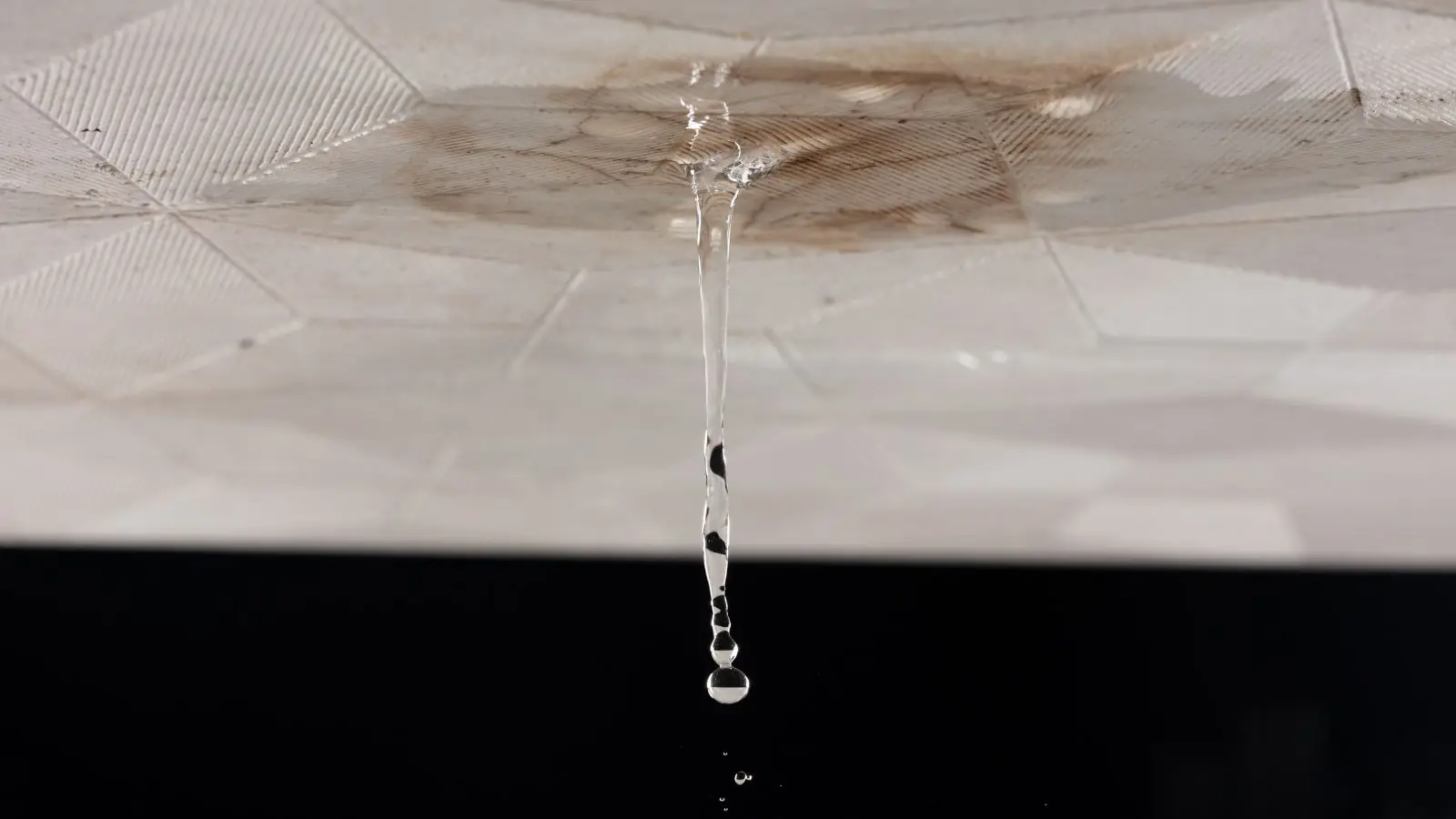
Roof leak water damage in Flower Mound, TX is what happens after rain gets past the roof covering and soaks the attic insulation, decking and framing below it. Our 24/7 dispatch line sends crews to dry what the leak soaked. The one action to take now: call, describe where the water shows up, and put a bucket under any active drip.
A roofer repairs the roof itself. Our crew handles the water that already got inside. Both jobs matter, and doing only one of them is how a small leak turns into a ceiling stain two months later.
Where Roof Leaks Start and Where the Water Goes
Most leaks begin at an interruption in the roof surface. Flashing around a chimney or skylight loosens, a plumbing vent boot cracks, shingles lift or wear through, or one section fails after wind. Water rarely drops straight down from the hole. It runs along the underside of the decking, follows a rafter, and soaks through insulation before it finally appears somewhere else.
That travel is why the stain on your ceiling is often several feet from the real entry point. Once the attic insulation is saturated it stops insulating, and the weight of wet batts or blown-in material can press on the drywall below. A sagging ceiling panel is the late symptom, not the first one.
| What you notice | What it usually means | First move |
|---|---|---|
| Brown ring on a ceiling that grows after rain | Water is reaching the drywall from the attic | Call, and photograph the ring with a pencil outline and time |
| Dripping from a light fixture | Water has entered the ceiling cavity and wiring box | Turn off the switch, leave the fixture alone, call |
| Damp or compressed insulation in the attic | Active or recent leak above | Stay off the joists, photograph from the hatch |
| Dark, stained roof decking | Repeated wetting over time | Have a roofer find the source, then dry the framing |
| Musty smell in a closet near an exterior wall | Water inside the wall cavity | Call before opening anything |
| Paint bubbles near the top of a wall | Moisture traveling down from the attic | Mark the area and have it metered |
Sudden Leak or Slow Leak: Why It Changes the Work
A sudden leak, such as a section opened by wind or a branch strike, wets a defined area. Insulation there can usually be pulled out in one pass, and the decking dries quickly once air moves across it. The crew extracts water, removes saturated insulation and sets air movers and a dehumidifier in the attic and the room below.
A slow leak is harder. Repeated wetting darkens the decking, compresses insulation into a mat and lets moisture sit against framing for weeks. The crew meters more of the attic, opens more material and watches readings for longer before calling anything dry. A slow leak also changes your insurance conversation, which is covered below.
Seeing water from the roof? Call the 24/7 line and describe where it is showing up.
☎ (817) 623-9267Roof Leak Safety Steps: The First Hour
Do these in order
- If water is near a ceiling light, outlet or the electrical panel, switch off power only from a dry panel while standing on dry ground. If you see sparking or smell gas, leave and call 911 or the gas utility first.
- Place buckets under drips and puncture nothing unless the ceiling is clearly bulging with trapped water. If it is bulging, a small hole near the edge lets it drain into a container, and a plastic sheet below catches the rest.
- Move furniture, rugs and electronics out of the wet zone.
- Do not climb onto a wet roof. A fall is a bigger emergency than a leak.
- Take photos of every stain, drip and the attic insulation if you can see it from the hatch without stepping on the ceiling.
- Call a roofer for a temporary cover, and call our dispatch line for the water.
The Texas Department of Insurance says to make temporary repairs that prevent further damage and to keep the receipts. A tarp or sealed patch from a roofer is exactly that. Keep damaged items and insulation samples until your insurer has seen them.
How Our Crew Handles the Water
Trace
A technician follows the stain back through the ceiling to the attic, checking decking, rafters and insulation with a moisture meter and a thermal camera.
Remove
Saturated insulation is bagged and carried out. Wet drywall that will not dry in place is cut back to a clean line.
Dry
Air movers push air across decking and framing while a low grain refrigerant dehumidifier pulls moisture from the air.
Verify
Readings are recorded each visit and compared with an unaffected reference spot until the structure is back to normal.
Attic work has limits. Heat builds under a roof deck in summer, so crews schedule time there carefully and ventilate the space while equipment runs. If the attic hatch is small or the framing is tight, the crew may dry from the room below by drilling small access holes, which are patched during repair.
Your reference point is ANSI/IICRC S500, so ask any restorer how its crews follow it and how it logs readings. When the ceiling below is also damaged, water damage repair handles the drywall, insulation and paint after drying is confirmed.
Roofer, Crew and Insurer: Who Does What
The roofer finds the entry point, patches or replaces the failed piece and makes the roof watertight. Our crew removes wet material and dries the structure. Your insurer decides coverage, and the adjuster will want photos, moisture readings and the roofer's written cause. Ask each for paperwork that matches the other two.
If the leak followed a storm with wind or hail, see storm water damage cleanup for the wider triage. If water is also standing on a floor, emergency water removal covers extraction. Crews also dispatch to Lewisville and Argyle when a leak call comes from those towns.
Not sure what is wet in the attic? Call dispatch and walk through it with us.
☎ (817) 623-9267What Changes the Cost of a Roof Leak Job
- How much insulation is wet and whether it is loose-fill or batts.
- Whether the decking and framing need only drying or also replacement by a roofer or carpenter.
- Attic access, since tight hatches and low clearance slow work.
- How many rooms below show damage, and whether ceilings must be opened.
- How long the leak ran before anyone noticed.
- Days of equipment needed until readings reach normal.
Scope and price are explained before work starts. A written scope that separates attic work from room work lets you compare it with your insurer's estimate line by line.
Roof Leaks and Your Insurance Claim
The Texas Department of Insurance says most homeowner policies cover sudden and accidental water damage, while gradual leaks and seepage are generally excluded, including mold they cause. That split is why a roofer's cause statement and dated photos matter. A leak that opened last night reads differently from stained decking that has been wet for a season.
TDI also notes that mold can start growing within a day after a leak, so drying should not wait on the claim. Report the damage promptly, photograph it before repairs, and hold off on permanent repairs until the insurer has seen it. If you are unsure which category your leak falls into, check your policy and ask your agent.
Prevention and Mistakes to Avoid
The National Weather Service counts an average of 29 freezes per season at DFW in its 1991 to 2020 normals. Repeated freeze and thaw can open sealant joints, so an annual look at flashing and vent boots from the ground or by a roofer is a sensible habit, especially before spring storms.
- Do not leave wet insulation in place because the ceiling looks dry.
- Do not paint over a stain before the attic has been checked.
- Do not walk on attic insulation, because it hides joists and ceiling drywall.
- Do not let a patch stand as the only fix, since a temporary tarp is not a repair.
- Do not wait for a second rain to see whether it comes back.
Frequently Asked Questions
Yes. Dispatch is 24/7, including nights, weekends and holidays, and same-day response is available when crews are free. Call and describe where the water is entering and what is wet.
No. A roofer repairs or covers the roof. Our crew removes wet insulation, extracts water and dries the attic and rooms below. Having both lined up the same day keeps the leak from restarting the damage.
Water runs along decking and rafters before it drops, so the stain can sit several feet from the entry point. The roofer finds the source and the moisture meter finds where the water ended up.
Not always, but compressed or saturated insulation usually does not recover, and it holds water against the framing. A technician checks it with a meter and decides section by section.
The Texas Department of Insurance says sudden and accidental water damage is generally covered and gradual leaks are generally excluded. Your policy controls, so ask your agent and keep photos and receipts.