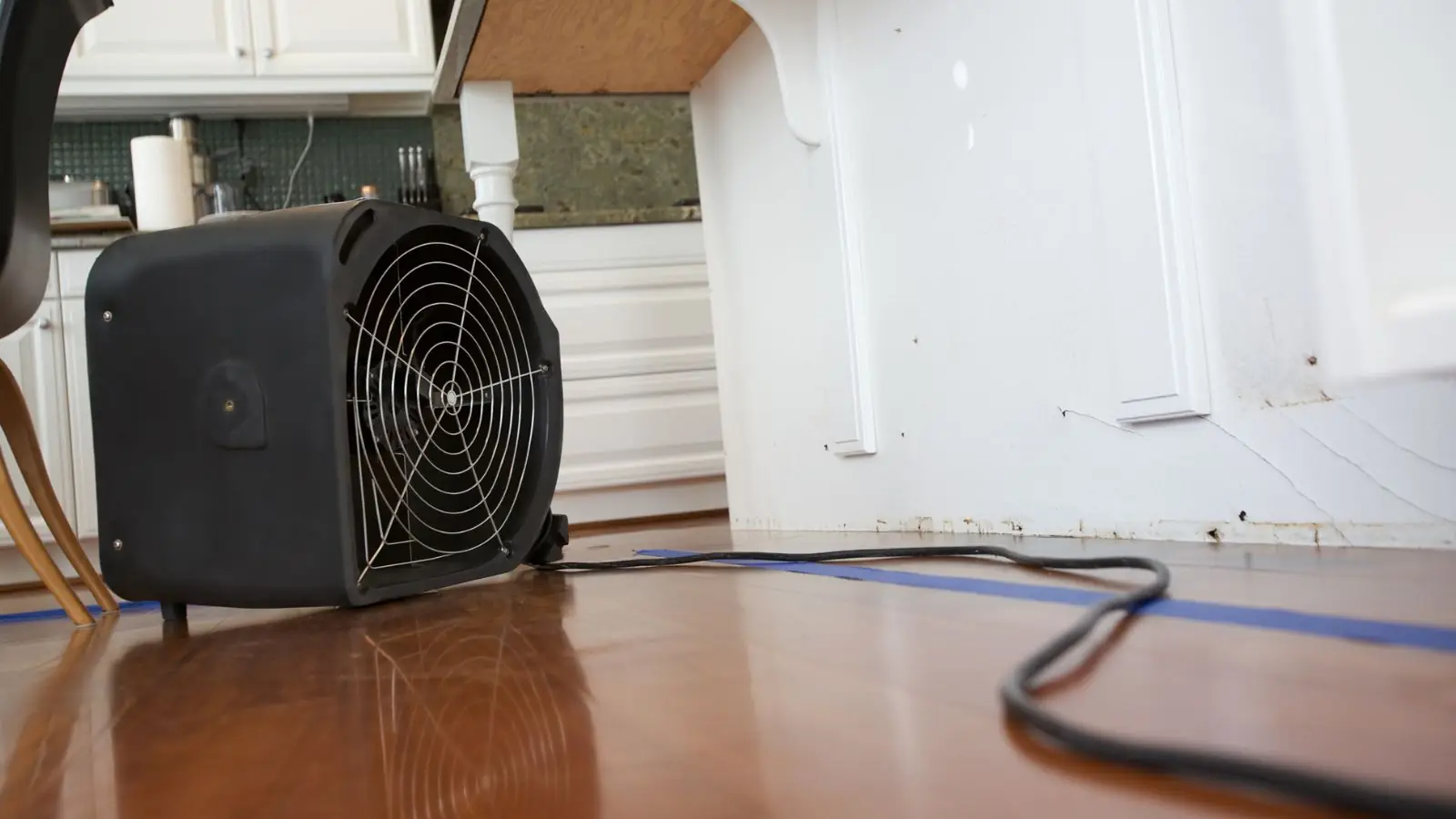
Kitchen water damage restoration in Flower Mound, TX is about the room itself: cabinets, countertops, flooring, the subfloor under them and the wall behind the backsplash. Call our 24/7 dispatch line and describe what is wet. The crew then separates the materials that dry in place from the ones that must come out. Same-day response is available when crews are free.
Why a Kitchen Holds Water So Well
A kitchen packs more water-sensitive material into a small space than any other room. Cabinet boxes sit on the floor, a continuous run of base cabinets hides the subfloor, and the sink wall carries both supply lines and a drain. Water gets in and stays out of view.
That is why a spill that looks small on the surface can be large underneath. Water slips under the toe-kick and spreads along the subfloor. A cabinet run blocks airflow, so the wet area stays wet. The source is often an appliance, covered in more detail on appliance leak water damage, or a sink line.
Cabinets, Counters, Subfloor and Backsplash: What Survives
| Material | What water does | Usual decision |
|---|---|---|
| Particleboard cabinet base | Swells at the bottom edge, loses strength and rarely shrinks back | Often cut out or replaced, since it will not hold a screw once swollen |
| Solid wood or plywood cabinets | Absorb water more slowly and can dry | Dried in place when readings allow, then checked for warping |
| Laminate countertop | Edges and seams lift when water gets under the substrate | Detached and replaced if the core is wet |
| Stone or solid-surface top | The surface is fine but the base cabinet under it may be wet | Detached only if the cabinet below must be removed |
| Subfloor under cabinets | Plywood or OSB soaks up water at the seams | Dried with directed air or opened if readings stay high |
| Backsplash and wall cavity | Drywall behind tile holds moisture against the stud bays | Drilled or opened to dry, tile removed only where needed |
The crew checks each material with a moisture meter before deciding. Readings are compared with a dry reference taken elsewhere in the home. A material that returns to the reference can usually stay.
Opening a Cabinet Run Without Wrecking It
We try to dry first and cut second. A toe-kick comes off in minutes and gives air access to the base cavity. Small holes in the back of a cabinet let a hose-fed air mover push dry air into the box. Many sink bases dry this way without any demolition.
When the board stays wet, the cabinet is detached from the run. Counters come off first, then the cabinet is unscrewed from its neighbors and lifted out in one piece when possible. Labeling the boxes makes reinstalling much faster.
Cabinets swelling or a floor going soft? Call the 24/7 line and describe the kitchen.
☎ (817) 623-9267Safety First: Water, Outlets and the Sink Wall
A kitchen is full of outlets and appliances near water. Treat any wet floor with caution until you know where power is.
- Shut the supply valve under the sink, or the main water valve if the stop will not close.
- Do not stand in water near an outlet, a range or a refrigerator plug. If water reaches an outlet or you see sparking, leave and call 911 or the electric utility first.
- Turn off a breaker only from a panel you can reach while standing on dry ground.
- If you smell gas from a range, leave the house and call the gas utility or 911 before calling us.
- Move food, small appliances and items from the lower shelves to a dry spot.
- Photograph and film the damage before anything is lifted or thrown away.
Our Process in a Kitchen
Find the source
The crew confirms the supply line, drain, appliance or dishwasher connection that leaked, and has it stopped.
Map the moisture
A moisture meter and a thermal camera mark wet cabinet bases, subfloor seams and the wall behind the backsplash.
Extract and open
A wet vacuum clears the floor. Toe-kicks, cabinet backs and wet flooring layers come off where the readings call for it.
Dry with the right equipment
Air movers, low grain refrigerant dehumidifiers and, where cabinets need it, directed air pushed into the box, run until readings match the reference.
For kitchen jobs, ANSI/IICRC S500 is the published guide, and a good restorer can say how its crews apply it around cabinets. A kitchen also has food and grease on its surfaces, so the crew cleans hard surfaces before drying equipment moves air across them.
Flooring Under and Around the Cabinets
Kitchen flooring runs from tile to vinyl plank to wood, and each handles water differently. Tile itself shrugs off water, but the grout and the underlayment below it do not. Vinyl plank can trap water in the seams. Wood boards cup when the wet side stays wet and the surface dries.
Because a kitchen floor often runs into the next room, readings are taken past the doorway as well. Moisture tends to creep into an open dining area or hallway. If a floor must be pulled, the crew explains how far the replacement goes before it starts.
Drying a Kitchen in Our Local Climate
The National Weather Service Fort Worth normals put DFW annual precipitation at 37.01 inches, so outdoor air is not a reliable drying tool. Opening windows can bring humid air into a kitchen that needs to dry. The Texas Department of Licensing and Regulation (TDLR) advises keeping indoor humidity at or below 50 percent, which is the reason we run dehumidifiers in a closed room.
We serve kitchens across Flower Mound, including ZIP codes 75022 and 75028, and nearby towns such as Grapevine and Lewisville. Once the kitchen is dry, new cabinet bases, flooring and paint fall under water damage repair.
What Changes the Cost of Kitchen Water Damage
- How many base cabinets must be detached and whether they can be reused.
- Countertop type, since a countertop that must lift adds labor, and some tops do not survive removal.
- Flooring type and how many square feet must be pulled.
- Whether the subfloor dried in place or needs replacement.
- Backsplash tile and drywall that must open to dry the wall cavity.
Dispatch explains scope and price before work starts. A single sink base that dries with a toe-kick removed is a very different job from a full run of swollen cabinets and a lifted floor.
Insurance for a Kitchen Loss
The Texas Department of Insurance says most homeowner and renter policies cover sudden and accidental water damage and generally exclude gradual leaks and seepage. A burst supply line under the sink falls on one side, and a drip that ran for months falls on the other. TDI also warns that mold can start growing within a day after a leak.
Per TDI, photograph or film the damage before repairs, keep damaged items until the adjuster sees them, and make temporary repairs to stop more damage. Keep receipts. Our crews record moisture readings and photos at each visit. Check your policy or ask your insurer about how it treats your loss.
Mistakes That Make a Kitchen Loss Bigger
- Painting or caulking over a swollen cabinet edge before it is dry.
- Running a household fan across a wet floor and leaving the cabinet doors closed.
- Replacing flooring before the subfloor reads dry.
- Throwing out damaged items before the adjuster has seen them.
Frequently Asked Questions
Dispatch is 24/7, including nights, weekends and holidays. Same-day response is available when crews are free. Call, describe the wet cabinets or floor, and a dispatcher will tell you what to do until the crew arrives.
It depends on the material. Solid wood and plywood often dry and stay. Particleboard that has swollen at the base rarely returns to shape and is usually replaced. Readings from a moisture meter settle the question.
Only when the cabinet below must come out. A counter that sits over dry cabinets can stay. A laminate top with a wet core is replaced, while a stone top can be detached and reset.
Look for a soft or springy spot, lifted plank edges, a musty smell at the toe-kick and a floor that feels cool. A moisture meter and a thermal camera confirm it without tearing anything up.
Sometimes. If readings show moisture behind the tile, small holes or one removed section let air reach the stud bay. Dry drywall behind the backsplash stays in place.